Friday, July 10, 2015

A New Website - Beekeepingchicks.com


July 10, 2015

I am so excited! We are proud to announce the newest venture here at Long Lane Honey Bee Farms: Beekeepingchicks.com! Our new website is slated to open July 25, 2015.

David didn't want me girling up his website, so the girls and I decided to venture out on our own and start our own website.  What I like about it is that we can source things like suits and jackets to really fit women--instead of bag-ladying it around in a big old man's suit. And hot pink hive tools! What do you say to that?

We will have some great jewelry, t-shirts, bags, hats and some wonderful balms that have beeswax, honey and royal jelly. Wow! I hope you ladies will check it out, and guys--your lovely beekeeping wives will enjoy these items.  I've also been told that if you're having trouble convincing your woman to join in the beekeeping with you, if you get her a pink suit or jacket, she's hooked! (this fall we'll have other colors as well!)

But we're serious about beekeeping too.  We have hives, tools, extractors and books. Our prices include shipping already, so you won't be surprised when you get to check out at how much shipping prices are now (they are outrageous!). Be looking for classes at our Fairmount (IL) Training Center just for ladies only, and we're going to incorporate the kids in someway soon too.

Hive Kits with our Signature Pink Hive Tool
Hope to see you then!

Friday, March 15, 2013

Spring Already?

I'm not sure how this year got started and into spring already.  I feel like I just got over Christmas, and now I'm staring Easter right in the face.
And of course that means we are right in the midst of the RED ZONE in our bee business.  This is the time of year for customers to order their bees, get their hive and equipment supplies ordered, and take classes.  So we are busy as bees, and happy, happy, happy to be doing so!

We have had a lot of classes this late winter, and a quite few yet for the rest of the year.  In the classes, we talk about cooking with honey, and many ask me how to convert recipes using sugar. With honey, of course!

Here's a cute little graphic I found that explains baking with honey really well.  Thanks to the people at ruralspin  for sharing it.
If you are cooking (on the stove top that means fellas) then there's no real conversion to adding honey.  If you are like me, I just throw it in and have at it.  So experiment and see if you like more or less because you can taste-test as you go along. 

Which brings me to breakfast.  Why breakfast, you say? Because breakfast is the meal our family loves the most.  We aren't crack-of-dawners by any means, but we love to get up, get the coffee going, head out to the coop and find what eggs the dogs hadn't gotten to yet, and come in and whip up some pancakes, eggs, and bacon.  And yes, we drink sweet tea with our breakfast.

I found this simple but really good pancake recipe.  I hope you like it:


 2 cups complete buttermilk pancake mix
 1 tablespoon French vanilla flavored powdered non-dairy creamer
 2 tablespoons cinnamon 
 1/4 cup water
 1/2 cup soy milk
 1 teaspoon vanilla extract
 2 tablespoons honey
butter
big 'ol quart jar of honey to put on table cause everyone will want to drizzle more over their pancakes, and add to their coffee

Directions

In a medium bowl, mix together the pancake mix, coffee creamer, and cinnamon. Add the water, soy milk, honey and vanilla; mix until just blended, but do not over mix.
Heat a griddle or large skillet over medium heat. Melt butter in pan. Ladle your pancake mix into pan.  Cook until bubbles form, then flip and brown on the other side.

I hope you enjoy your family (and breakfast) as much as we do. And enjoy the spring!


Friday, November 9, 2012

A Burns Family Blessed Year

This year has been extraordinary for the Burns family.

Our son David, about to be a parent for the first time
and our son Seth, US Marine
It has been hectic, with a lot of work, but also some big changes to our family. Our business nearly tripled this year, and while that certainly is a blessing, also meant hiring and training new employees, some of whom are family members, and others who have become lifelong friends.(It's always a blessing to hire family members but presents unique situations of its own.) We had one daughter get married, one son become a US Marine, and another son announce a new grand baby for us on the way. (That will be 6 total!).  We have been able to take a couple of short trips to Chicago and Iowa, David got to participate in this year's EAS in Vermont, and we spent a week in beautiful San Diego, California and saw the Pacific ocean for the first time. Our family reunion was held in July in Southern Illinois, and we also held a record number of weekend classes and workshops for our business.  Customers have been great (as usual) and while most of our business is online, have been able to meet quite a few of them who venture out here to corn land to see us on our farm. We are currently building a new classroom/learning center facility here at our farm to house our classes for this coming year and getting ready to plan the holidays coming up soon (with 6 children, and (almost) 6 grandchildren, plus spouses, we can fill up a house fast!)

Our new Learning Center

We are looking at a few weeks here at the end of the year to be quiet, calm and peaceful--and then the RED ZONE time for us starts --from about mid January to July when the bee season blasts off.

I hope you find the rest of 2012 to be peaceful and relaxing.  Have fun with your family.


Tuesday, May 1, 2012

No Honey Extractor? No Worries!

Honey is the world's first sweetener.  Honey made the world's first alcoholic beverage, called mead.  Honey was one of the world's first medicines, used for everything from sore throats to wounds.

So, it's been around since the beginning of time. And those folks had to learn to get the honey out of the hive without the use of modern equipment, called extractors or centrifuges. Back then, it was common that most had their own beehive and there were very few big operations where large machines would have been needed to extract honey to haul off to companies like Sue Bee.

1930's Price for Extractors
Extractors can be expensive.  The cheapest plastic ones with shipping costs can run up to $150.00. A nice American made, high quality extractor can start at around $300 before shipping.  So what can you do if you can't afford one?

One thing you can do is to borrow an extractor or rent one.  Many bee clubs have them available for their members, all you have to do is sign up for a date and sometimes put down a small deposit that you will get back if the equipment is returned in good condition.  There are also places where you can rent an extractor, or buy time in someone's honey house. You'll have to be the judge on this, because sometimes paying the rental fees aren't a good deal, so think wisely on this one.  Some areas have commercial kitchens that you can rent by the hour, and some of those kitchens may have the equipment you need.

Manual extraction is another option, sometimes called the "destruct" method.  Back in the old days, women would walk out to the beehive, open it up and take out one frame.  Upon returning to the kitchen, she would open up the cappings with a fork, suspend it above a bucket, and let it drip out.  It's a very slow method, but an effective one if you keep a frame hanging all the time.

If you have plastic foundation, another way to extract is to pull out all the honeycomb, placing it in cheesecloth suspended over a bucket (use food grade please, not paint buckets).  Squeeze the comb and allow to drip through the cheesecloth into a strainer fitted over the bucket.

If you have bees-made wax, or fitted your frames with wax foundation, you could use the method above, or you could just cut out honeycomb sections, placing directly into a tupperware container with a lid.  Some  folks will now freeze it (in case there were any other little critters in there) and use upon having been frozen for 24-48 hours.


Tuesday, April 3, 2012

Plants and Flowers for Bees

We are having a very busy time right now! Honey bee season is fast upon us.  The weather warmed up extra early this year which sent even more people into a beekeeping frenzy than usual and consequently swamped us.  We are grateful for our customers this year-- we tripled our business in the month of February.  We had no idea this would happen --no projections would have prepared us for that.  Perhaps a 10 percent increase in business, maybe even 20--but triple? Thank you to those of you who are now our new customers, those of you returning again, and for those of you who go out of your way to tell people about us and send more on to us.

In the middle of our busiest season, our youngest daughter Karee eloped to Montana with our IT guy Jesse, who is also one of our shop carpenters.  We've also had our shop shut down for weekends on end now so we can teach classes, vend at other classes, or be at conferences in the tri-state area. We hired four new people to help us out this year, so I won't be the only one you talk to on the phone anymore, but please make the other gals (and guys)  as happy and blessed as you have made me over the years.

This year I noticed a different pattern in the students in our classes.  Typically we get only people wanting to start beekeeping, or wondering if they can do it or have enough money.  But this year I noticed many folks who come just to learn more about this incredible creature and find out what they can do to help without becoming a beekeeper.

Here are some of the best ways you can help: 1) Try to limit or completely stop using pesticides on your lawn, gardens and flowers.  If you absolutely have to use something, try something more organic (although if it's still claiming it's a pesticide, it doesn't really matter if it's organic or not, right?) or try using a liquid late in the evening after the bees are back home that can dry before daylight.  Stop spraying those dandelions! Bees LOVE dandelions and it makes the best honey. Don't use a powder pesticide.  2) Let wild areas grow up in your yard, and stop mowing ditches and fence rows.  I know it doesn't always look that great, but bees have less and less area to forage now, and this is one thing you can do to help.  Try to persuade your farmer neighbors to leave the edges of their fields and ditches alone too.  I know it looks more tidy when they mow from the edge of their field down to the road, but think of all the wild flowers that get mowed down. 3) Advocate for the bees if you can.  You need a little bit of knowledge for this--but some ideas would be to have a showing of a movie like Vanishing of the Bees, or Nicotine Bees at your local library or school and invite the public; ask your local nature center if they would hold a bee workshop (many, many of them do) either for adults or in their children's summer camps; donate books on bees to your local library--both for adults and children and 4) plant flowers and plants that bring bees and other beneficial insects into your yard.

I don't often see bees on plants like daffodils, tulips, roses or lilies, but early plants they love include boxwood, dandelions, clover, borage and many budding and flowering trees.  Mid summer plants and flowers include mint, catnip, flowering herbs, cilantro, and of course vegetables flowering in your garden.  I also let some items in my garden flower that typically we eat before it flowers--like the lettuce for example, just so the bees will use some of it.  Late in the year, my bees love my cosmos, sunflowers, lavender, sage, coneflowers and seedum.

You can help even if you don't want to be a beekeeper!

Wednesday, February 22, 2012

Are Your Bees Hungry?

A winter cluster of bees

Winter in the north can be any extreme.  We can experience temperatures of around 0 for days at a time; or several days of 50 degree weather.  The snow can be very deep, or barely nothing at all.  


Here in Central Illinois we have experienced a bizarre winter.  Now, I realize I have a lot to do with that.  Last August I got my motorcycle license, and after getting it so late in the year, I realized that I wouldn't be able to ride for very long before putting my bike up for winter.  So I wished and prayed and kept my fingers crossed for a mild winter, and I got it! I have been out on my bike a number of time in December and January, and today --February 18--the temperature has hit around 50 degrees again.


All of this to say that this kind of weather does strange things to the nature around us too.  Trees or plants blooming too early can be cut down as we get a freeze, which is still likely in the next month or so. The honeybees are out looking for something to devour and not finding a thing.  Which leads them to eat an abundance of what they have on hand--honey!


A warm winter can lead to honeybee starvation far quicker than a very cold winter.  In the coldest of winters, bees will cluster in a ball to stay warm, using very little resources and needing very little food.  They use those rare, occasional days of warmer temperatures to fly out to defecate and hunt for their honey.  But with the weather being so warm, and for so often, they are going through their storages quickly.


Or for some, those bees didn't have enough to start off the winter.  Some beekeepers, mostly out of a lack of skill or knowledge, will take off too much honey.  Or, anticipating a late fall nectar flow, will take off all the honey in the deep summer, and then realize because of weather conditions, that fall flow didn't happen, leaving the bees short on stores for the winter. 


Bees then need to be fed.  Because we have asked these bees to live in our yard, in our boxes, in our environment, in our weather, I believe we have the responsibility to help them out.


One of the easiest things you could do is make sugar patties--a sort of a "fondant".  Some companies have now started selling these, but they are very simple and cheap to make--I wouldn't suggest putting your money into purchasing them and paying shipping when it is so easy.  Simply take 2 cups of powdered cane sugar (beet sugar is  a GMO, cane sugar is not--the package has to say CANE) and combine with 1 ounce of water.  Roll into a ball and flatten out and lay on top of the frames where the bees are (obviously don't put it three supers up away from the cluster).  I also add 1/2 cap full of Honey B Healthy and 1 - 2 tablespoons of pollen/pollen powder.  If you only have pollen patties, just cut a small section and press into the sugar patty. 


Easy peasey as my youngest says.  Now, go feed those bees. :-) We also sell a candy board at honeybeesonline.com if you are interested.


Wednesday, February 15, 2012

Milk and Honey Soap


Getting ready for a class on making soap, I was digging out a few recipes today and came across one for milled soaps.

Milled soaps are easy! It's just a fancy way of saying "grate whatever soap you have laying around the house and melt it down."  But milled soap sounds so much more romantic. It is also sometimes called "rebatching".

I have made the old-fashioned lye soaps and while it can be fun to create with different oils and fragrances, it can be a little tricky working with the lye.  If you'd rather not be quite so adventurous, and scared of highly toxic chemicals,  you could go to your local hobby store and buy cubes of "melt and pour" soaps which you just melt down and pour into molds.  Pretty, but not overly crafty, but a nice way to spend an afternoon.

In making the milled soaps, you start off with any kind of traditional soap and grate it.  Some use leftovers bits they have been saving, others buy a specific brand of soap.  Some will make lye soaps, and then grate them down.  Whichever way you choose, for this first recipe, you need about 12 ounces of a grated soap and 9 ounces of water.  Melt the soap in the water, adding 1/4 c instant powered milk and 1/4 c honey.  Stir until thick before pouring into molds, or the honey may sink to the bottom of the molds (which could give it kind of a cool look). Options to include may be up to 1 T of ground toasted oatmeal, food coloring, or essential oils of your choice.  Let the soaps cool and cure, or place in the freezer, before taking out of molds.

Milk and Honey Soap
12 oz of basic soap, grated
9 oz water
1/4 c instant powdered milk
1/4 c honey
Instructions: Melt together the 12 oz of basic soap and 9 oz of water.  Add the milk and honey, stirring until fairly thick.  Put into molds and allow to cure.

Hope you all are enjoying a wonderful new year.  The beekeeping season is right around the corner, and I can't wait!


Thursday, December 22, 2011

Merry Christmas from the Burns Family

From left to right: Kellie, Jesse, Jill, Sheri
Dustin, Seth, Christian, Lara, Karee
David, (Claire is hiding behind David), Jennifer, Allison, Sarah
(not shown: Nikki, David and Curt)

It is totally impossible to believe how fast this year has flown.  It seemed like only the other day when I was putting out last year's Christmas card.  We have been very blessed this year,  have all been healthy, have grown closer together and to God, have met some amazing friends and customers and now are looking to close out yet another year with all of you.


Thank you.  To our friends: thank you for your friendship, caring and support.  To our customers: thank you for doing business with us, keeping us busy and fed, and supporting us by recommending us to others or mentioning us in your bee clubs, blogs, tweets, and facebook statuses. To our family: thank you for being yourselves, helping us when we've been overloaded, giving us a hand with the work, fixing things that needed fixed, and keeping us old people company.


Merry Christmas from all of us at Long Lane Honey Bee Farms!!

Tuesday, November 15, 2011

Honey Salad Dressings

Our girls - Nikki- our daughter-in-law, Jill, Karee,
and Jennifer

As we near the holiday season, I like to reflect on the past year.  It's been a good year.  One filled with new things.  It's been a little hard in some ways, but mostly it's been a real blessing.

One of my biggest blessings is, of course, my family. David and I have six terrific children.  What is so neat about our kids is that none of them are in anyway similar--either in looks, temperament, personality, or actions.  It's been fun seeing them grow into their own persons, and watch them choose their professions, their spouses, and take on the world.  It's been scary watching some of them--it's never easy to watch your kids fall (or even fail) and not want to rush in and pick them up.  But they all stand on their own two feet, are strong and independent, and pretty much fun too.

This past year, our oldest daughter Jennifer, along with her family moved back into the area--only about a 10 minute ride straight down our main country road.  It's been a joy seeing her more often and having the grandchildren so close by.  She invited us to come eat with them last night, and served a good honey dressing (along with a few other things as well!). 

I rarely make a salad dressing from a recipe, it's so easy.  I start off putting about 1/4  to 1/2 c of a good olive oil, and 1/4 c - 1/2 c of honey into a canning jar. Add salt and pepper to taste.  Now add an acid of some kind -- could be orange/lemon/lime juice, or a good vinegar like raspberry or apple cider--a few tablespoons should be about right. Now last, add some flavoring, such as seeds, herbs, or spices like mustard and paprika. If you are looking for a creamy dressing, add sour cream or mayo--about 1/4 cup.  Put the lid on that jar and shake away. But for those of you who like an actual recipe, here are a couple:

Honey Mustard Dressing
1/4 c mayo
1 T prepared mustard
2 T honey
1/2 t lemon juice

Honey Poppyseed
1/2 c olive oil
1/2 c honey
1/4 c apple cider vinegar
1 T poppyseeds
1/4 t paprika
1/4 t worcestershire sauce

Honey Orange
1/4 c sour cream
2 T orange juice
2 t chopped green onion
1/4 c honey
1/4 c olive oil
salt and pepper to taste


Sheri Lynn Henness
Born January 3, 1962
Today also marks 50 days until my 50th birthday.  I decided I wanted to do something very special for this very special birthday.  I thought of some of the usual things, like maybe a cruise with the kids, or jetting off to Italy with David--but mostly those were just wishes.  So I decided to do something that might make a bigger difference to someone else, so I am going to collect 50 items to take to our local Women's Care Center in Danville, and I need your help.  In my next blog I will tell you what I need to collect, and these items will represent the biggest needs the center has, and if you can, send it on to me, or bring it in to our store, and it will be included in my birthday present to the center on my birthday January 3, 2012. 


Until next time,


Friday, October 28, 2011

Do-It-Yourself-and-Save-a-Bundle Beeswax Balm

Beeswax
After an absolutely gorgeous week in Southern Illinois, where I finally took a fall off my motorcycle, and lived to tell about it, I found that riding made my skin very dry and sensitive.  I have made my own balms and salves before, but thought I would go online to see what products were currently out there.  I was shocked to see the prices folks were charging for balms--some as much as $12 - $13 for 2 ounces.  I have no problem with people making a product and selling it for what they want, but when I realized that I could make it for only mere pennies on the dollar, and you could too, that it was time to tell you how to do it.

Balms and salves are simply olive oil and beeswax.  The only real difference is where you decide to rub it, whether it be your lips, on your elbows, or your feet! You can add essential oils or herbs to it, choosing appropriate ones for different parts of your body (you may not wish to add menthol and peppermint to your lip balm for example, but hey, maybe you do!)

So where do you get beeswax? Know your beekeeper! Many beekeepers will keep it in stock, or you may have to call and place an order before hand so he or she can save you some next time they extract honey.  You could order it on ebay or get it from your local craft/hobby store, but you really don't know what you are getting then.  Some of the "big box" bee supply companies carry it, but it's typically been bought from big commercial beekeepers who use chemicals in their hives (and is in the wax that you would then be putting on your body).  I suggest an organic source like Glory Bee, who also is a good source for the oils and herbs (tell Kaitlyn I sent you.)  Another source I trust is Mountain Rose Herbs.
Sheri's Simple Salve
1/2 c olive oil
1 oz beeswax
10 - 15 drops of essential oil (all one kind or mix and match)

Heat olive oil and beeswax together in a double boiler until melted.  Remove from heat, adding essential oils and placing quickly into jars with caps on.

(really? $6 an ounce for that?)


Tuesday, October 18, 2011

Classes Galore and No Bake Honey Drops

Sheri and Jennifer teaching kids about bees and beekeeping. 
I am a teacher by profession, and a beekeeper by accident. I have always enjoyed teaching. I know it's one of those things that you either like or you hate, and I happen to like it.  I started teaching preschoolers back in the 80's, then was a librarian for awhile, and then started teaching pre-kindergarteners for a bit.  In 2000 (I remember it well because it was a president-election year and the "hanging chad" debacle) I started teaching junior high health and did that for 10 years.  I enjoyed that teaching job immensely until the next presidential election, at which time that current president decided to cut my program and I was without a job.


I began helping David teach beekeeping classes just a couple of years ago when the classes became to get really large, and I have truly enjoyed it. I also taught Sunday school, vacation bible school and bible studies for nearly 3 decades. I've led reading groups and young mothers groups,  taught childbirth classes for a short time, and even taught young teens CPR and first aid for their babysitting jobs.   I am currently homeschooling Seth, and soon Christian. 

You'd think that means I'm a really smart person, but I'm really not.  Somehow when I was in school back in the psychedelic 70's, I learned how to ace a test, but quickly forgot whatever it was we were learning in school. But one thing I learned, and the one thing I teach my kids now is HOW to look up information--where to find it, how to search for it, who to ask. 


Our classes at Long Lane Honey Bee Farms are over for the year. We taught about 15 classes and short courses here at our farm (until they got so large we had to move the classes to a bigger facility) as well as taught at other clubs and colleges.  We had about 200 people go through one of our courses at the farm this year, and numbers unknown at the college courses, clubs, and associations that we taught at (but we're guessing about another 300 - 400) and without exception, we enjoyed everyone of them. 

At last week's Natural and Sustainable course, I made Honey Drops and leave you with the recipe here:

Honey Drops
1 cup honey
1 cup creamy peanut butter
2 cups powered milk
dash vanilla
1/2 c granola
1/4 c miniature chocolate chips (optional)
1/4 - 1/2 c powdered sugar

Cream honey and peanut butter together first, then add remaining ingredients.  Shape into balls and roll in powered sugar.  Keep in refrigerator.


Monday, September 26, 2011

Autumn Time with Honey

My autumn honey display in our store
Autumn is officially here.  And it has been unofficially here for some time with the rain, wind and coolness we've had the past week or so. 


Honey lends itself so well to autumn cooking.  I can not wait to put a ham in the oven, covered with honey and orange juice (usually 1 cup of each).  Along with that ham, I'll probably make some potato salad. You may be thinking that potato salad sounds like a summer time picnic item, but this potato salad is a cooked recipe, which can be served warm. And we had some of the absolute best potatoes from our garden this year.  Yum.


Honey Dill Potato Salad
1 1/2 lb boiled small red potatoes
4 strips bacon
1 med onion, chopped
6 T honey
6 T apple cider vinegar
1/2 t cornstarch
1/2 t water
2 T fresh dill or 1 T dried


Cook bacon until crisp, remove bacon, adding onions to bacon drippings, cooking until soft.  Add honey and vinegar to pan, bring to boil.  Blend cornstarch with water, stir into honey mixture.  Cook until thick, stir in crumbled bacon and dill.  Cut cooked potatoes into bite size pieces, combine with dressing.  


Remember, adding honey to any hot drinks is great whether it be coffee, tea, or mulled ciders.


I am sad summer is gone, I had so much more to do this year, but am looking forward to the upcoming holidays and spending more time with the family. I hope your fall is "sweet" too!


Thursday, September 15, 2011

Popcorn Balls and Party Mix with Honey

Christian at the Children's Garden at Morton Arboretum (Chicago)
We had the pleasure this past week of being invited to speak at the Honey Bee Festival at the Morton Arboretum in the Chicago area and while there, we passed a booth where they were selling popcorn balls.


Popcorn balls! I always think of this time of year when I think of popcorn balls because that seemed to be the one thing that as kids we hated to get when we went trick-or-treating! We always wanted some of those miniature chocolate or snickers bars or a peanut butter cup! Do you remember?  Now that I'm older I realize whoever was giving out those popcorn balls had spent a lot of time making those and thinking they were doing us a favor by giving us something a little bit healthier, and was probably being frugal in the process, something I heartily endorse.


Popcorn Balls with Honey
3/4 c sugar
1 t salt
1/2 c water
3/4 c honey
3 quarts of popcorn


Cook sugar, salt and water to very brittle candy stage of 300 degrees F.  Add the honey slowly stirring all the while until blended.  Cook again until thermometer reads 240 degrees F.  Pour mixture over popcorn and form into balls.  Add nuts, or candy bits as desired. 


We had a birthday cake and ice cream all set for Christian this week for his 4th birthday, but then he got really sick and so we had to skip it to a later time, but meanwhile my family enjoyed eating the party mix I had set out. 


Honey Party Mix (adapted from Carol Kuehl)


1/2 c butter
1/4 c brown sugar
1 c honey
1 gallon mixed cereal (such as chex, crispex)
2 c mixed nuts


Bring to boil butter, brown sugar and honey. Pour over cereal and nuts, stir.  Bake at 225 degrees until dry, about 1 hour, stirring every 15 minutes.  Let sit to finish drying and break apart into bite size pieces.  Keep sealed in bowl with tight lid. 


I believe in celebrations!  Life is hard sometimes, really tough, and I think one way to get through the difficult things is to celebrate as often as possible, even if you have to make a celebration up.  One of my favorite quotes is "stop worrying about the potholes in life and just celebrate the journey!"


Wednesday, August 10, 2011

MORE Canning and Preserving with Honey Part 2


I have spent the last couple of weeks working furiously to get my garden into jars. "Garden in a jar" would make a catchy name for a vegetable company, wouldn't it? With sweat dripping off my forehead in gallons, and a near heat stroke (complete with headache and nausea), I finally realized my dream of a packed pantry. 

I have also been receiving various canning recipes from gals who use honey in their recipes, so I want to reprint at least one of those here.

First, I want to give you my corn relish recipe for canning.  I was persuaded this year by a friend, who is a horticulturist at a university near-by, to try something called "kohlrabi". I can't really describe to you what this thing looks like, but it is a big green ball with numerous appendages coming out of it and tastes like cabbage/radish.  But what to do with it?  I finally decided to shred it and add it to my corn relish. I also completely substituted out the sugar in place of honey, and used up the rest of my corn, green peppers and tomatoes.

Corn Relish Canning Recipe (I remember this by adding 2 cups this, 2 cups that..)
2 c corn
2 c chopped onion
2 c chopped tomatoes
2 c cucumbers
as much kohlrabi as you can stand
1 lg green pepper
1 c honey
1  c cider vinegar
1.5 t celery seed
1.5 t mustard seed
1 t salt
1/2 t ground tumeric

Combine, bring to boil, cook 20 -30 minutes.  Put into hot, sterilized jars and follow manufacturer's instructions for canning. 

Aunt Mary's Beets
This recipe was given to me by a customer named Anita whom we met in one of our classes back in March, who is sharing her Aunt Mary Hawk's recipe here, and from Anita's description, she sounded like a wonderful lady.

2 cups white vinegar
2 cups honey
2 cups water
1 tsp cinnamon
1 tsp cloves
1 tsp allspice

Boil beets (leave 1 inch of tops and root intact) for 20 minutes in water(fork tender but not mushy), plunge in cold water and slip the skins and trim root and tops. Pack in sterilized pint jars, leaving smaller beets whole, chunking or slicing larger ones. Bring above ingredients to a rolling boil and pour over beets, filling jars, but leaving 1/4 inch head space. Place lids on top and tighten rings. These will actually seal without water bath process, or you can water bath process for 10 minutes if desired.

How many beets, you say? Well, Aunt Mary sounds a lot like me, and that is when you go out to your garden and bring in the beets, you don't have any idea what you are going to end up with.  So bring them in--however many you have--prepare them as above, putting them in jars and pour the juice over.  When you run out of the prepared juice, you just make more until you have covered all your beets. That's farm cooking. You don't know what you're starting with or what you'll end up with, but it's usually fantastic. 


Monday, August 8, 2011

Honey Baste for Pork or Chicken

Good eats tonight with the most wonderful basting sauce on our pork chops.


It is a recipe that I change up often.  The basic premise of it is fairly straight forward, but depending on what's in the fridge or cabinets, I change the ingredients.  Don't be afraid to do this, I understand it because I used to be scared, but what's the worse that can happen--you don't like it and have to start all over again?


I made the chops in Granny's electric skillet she left me and then at the very end, I basted the chops with this sauce:


Honey Blackberry Mustard Sauce (for pork or chicken)
1/4 c spicy brown mustard (use up to 1/2 c if you want a thinner sauce to go further)
1/2 c honey plus 1 T sugar (use up to 1 c honey if you want a thicker sauce)
3 T blackberry jelly plus 1 T orange marmalade
1 T mustard seed


Simply stir ingredients together and keep in a jar with lid in refrigerator.  Can also be used for a dipping sauce for pretzels or veggies, or added to potato salad or sandwiches.


How to substitute: If you would rather make your own mustard, you can use ground mustard and add vinegar.  The really fun thing would be to try different vinegar for different tastes--how about raspberry vinegar?  You can substitute any kind of jelly, jam, preserves or marmalade in this recipe--I used blackberry because it's what in season and what I just spend the last week doing.


Making blackberry jelly

And while I'm on the subject, what is the difference between preserves, jelly, jam, marmalade and conserves?


Here's the simple gist of it.  I'm sure it's more complicated than I'm about to make it, and some great chef or cook out there will want to correct me, but I'm working with a very simple mind here, so I will give you the Sheri run-down:  Preserves is a general term to describe any jelly, jam, conserve, etc.  Jelly is made with only fruit juice while jam has bits of fruit in it.  Conserves on the other hand is jelly with the whole fruit.  Marmalade is typically a tropical fruit (like oranges) and not quite so sweet. Simple enough, and all can be made with honey instead of sugar. 


Tonight's meal included freshly dug potatoes from our yard, cooked and seasoned with butter, parsley, salt and pepper along with green beans (from our yard), cooked in boiling water for a few minutes, then sauteed in olive oil with butter, salt, pepper, green onions and mustard seed. I love summer eating!


Monday, July 18, 2011

Canning And Preserving Using Honey


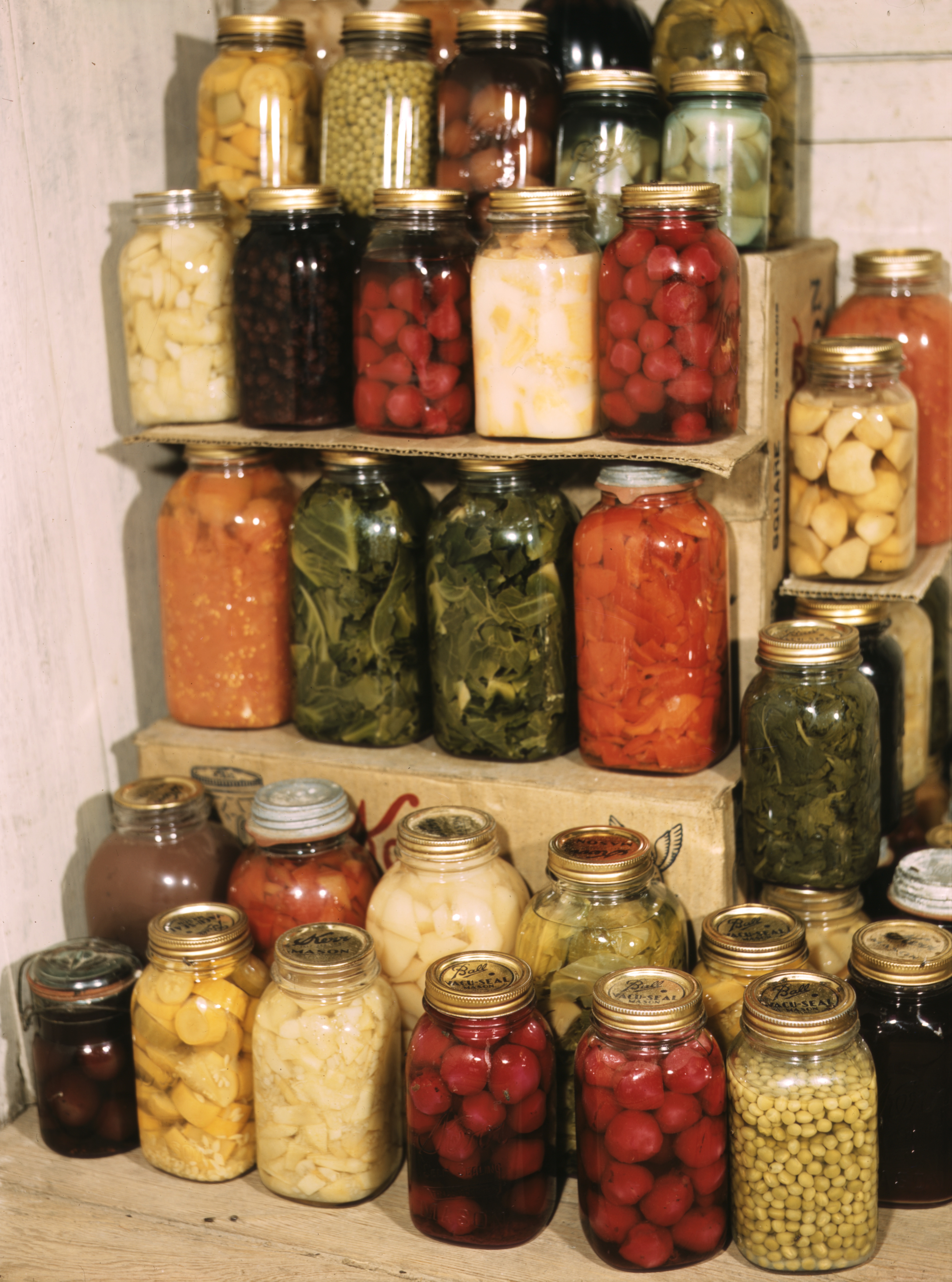
Canning time is upon us! My mom canned a little bit when I was a tiny lass until she had a major canner explosion and was scared ever since.  So I really didn't see anyone can or preserve food when was I was younger, and didn't know anyone who did it when I became an adult.  At least if they did, it was a well kept secret, and it wasn't until a couple of years ago that my good friend Tricia showed me how to do it.  I had always preserved simply by freezing or drying up to that point, but now I'm a canning convert.

Canning parties are gaining popularity right now, especially with folks in the city.  Canning fresh, organic foods in season is the only way to truly obtain the best foods possible for your family through the winter months. You could certainly buy foods out of season, but that also means it's been picked while green, shipped and trucked thousands of miles--using tremendous resources we can hardly afford anymore--and it's usually pretty bland in taste.( Folks who have never tasted a fresh tomatoe right out of the garden have no real idea of how a true vine ripened tomatoe tastes.) You can buy factory canned food, loaded with salt, preservatives, and other things unpronounceable, but common sense, science, and our doctors are telling us now that these processed foods are not good for us.
File:PreservedFood1.jpg


Before you start canning, you must know how to can.  I would recommend you get the Ball Complete Guide to Preserving. If you are getting a new canner, read the guide thoroughly.  If you are using a used canner, and it doesn't have a guide, please make sure you are either a seasoned canner, or you can call the manufacturer and ask for a book. If you don't know what your are doing, or you do some steps incorrectly, you can run the serious risk of hurting or making sick yourself or others you feed.

You can can and preserve with honey! Most canning manufacturers say you can substitute up to half the sugar called for in a canning recipe with honey.  If you were to use all honey, which some do, it will make your finished product much darker, and can cause some issues with any pectin you are using, but you be the judge.  In recipes using a commercial pectin, you can replace regular sugar with up to 1 cup of honey with good results. Otherwise, substituting honey for sugar is all a matter of taste.

Try this applesauce recipe for canning.  Follow YOUR manufacturer's directions for canning with YOUR canner.

Applesauce with Honey
16 c apples- peeled, cored, cut up
1 c water
2 t lemon juice
1 t cinnamon
1/2 t allspice
Start with 3 T honey, up to 1/4 c of honey to your taste

Put apples, lemon and water in pot, bring to boil and cook until soft.  Add the honey and spices at the end, cooking a few more minutes.  Either smash with wooden spoon if desiring chunky, or put in blender if desiring a smoother texture. Follow your manufacturer's guide to canning.  Can be frozen in containers with good results as well.

Here's a couple of recommended resources for more information: Canning and Preserving Without Sugar by Norma McRae and Putting It Up with Honey by Susan Geiskopf.